Context
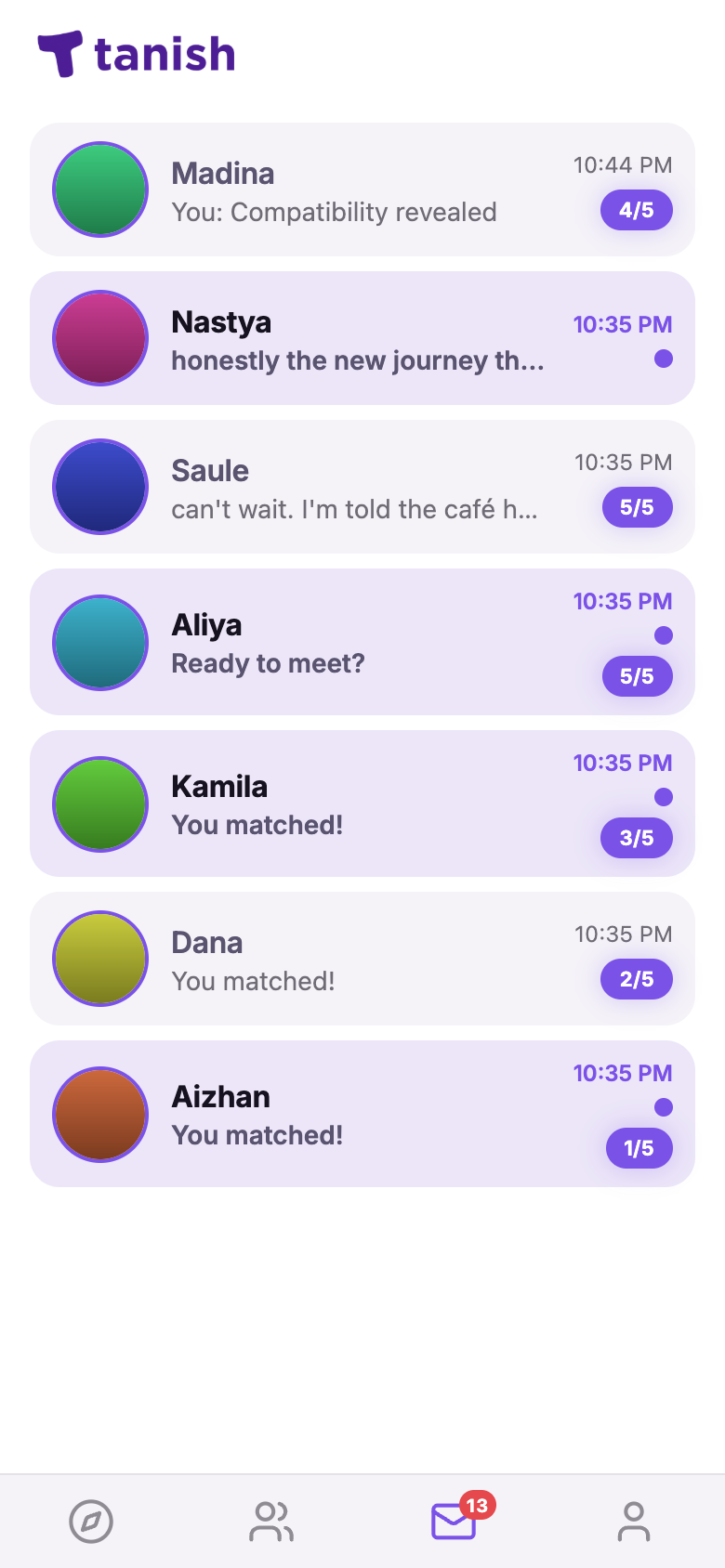
Western dating apps don't translate well to Central Asia. None of the big ones ship Kyrgyz, and family reputation and safety concerns make women cautious about being visible on a swipe app. Tanish is a Kyrgyzstan-first dating app built around a staged "journey": matches move through challenges and conversation stages toward a real date.
I co-founded it and, from April to August 2026, built the product end to end: the backend, the iOS app, the infrastructure and the release pipeline.
Architecture
- API
- FastAPI, async SQLAlchemy 2.0 and Pydantic v2, running as a web service and a background worker
- Data
- PostgreSQL with Alembic migrations applied before each release, and Redis for rate limiting and caching
- Realtime
- WebSocket chat and push notifications
- Mobile
- React Native (Expo) iOS app, with EAS builds to TestFlight
- Media
- S3-compatible object storage, presigned upload and download URLs, and a moderation pipeline
- Trust
- AWS Rekognition face liveness, OpenAI moderation API and JWT auth
Face verification
Fake profiles are a serious problem for a dating app, so I added face-liveness verification with AWS Rekognition. The backend creates a liveness session and gives the device short-lived STS credentials that can only start the Face Liveness stream. Results are fetched on the server with the backend's own credentials, so no long-lived AWS keys reach the client.
- Rekognition returns a wide age band. Nobody is approved unless its lower bound is 18 or over; everyone else goes to ID verification or human review instead of being rejected automatically.
- The liveness photo is compared with the profile photos, and a mismatch is flagged for an admin to review.
The upload bug that broke a TestFlight build
Build 3 shipped with a "picture upload error" for every user. The cause was our storage provider's
S3-compatible layer, which rejected presigned POST uploads outright and has no object tagging.
- I switched all media uploads to presigned
PUTsigned over bucket and key alone, because a signed content type has to match the client's header byte for byte. - We used tagging to track unconfirmed uploads, so I replaced it with a janitor job that cross-references storage against the database and deletes orphans.
- I tested the fix end to end against production storage before the next build: ticket, PUT, register, signed GET and delete.
- Build 4 then exposed the next bug: full-resolution photos hit Rekognition's 5 MB limit or ran past the app's 15-second timeout. Resizing on the client fixed it, and I lengthened the register timeout for headroom.
Hitting our OpenAI quota during the beta
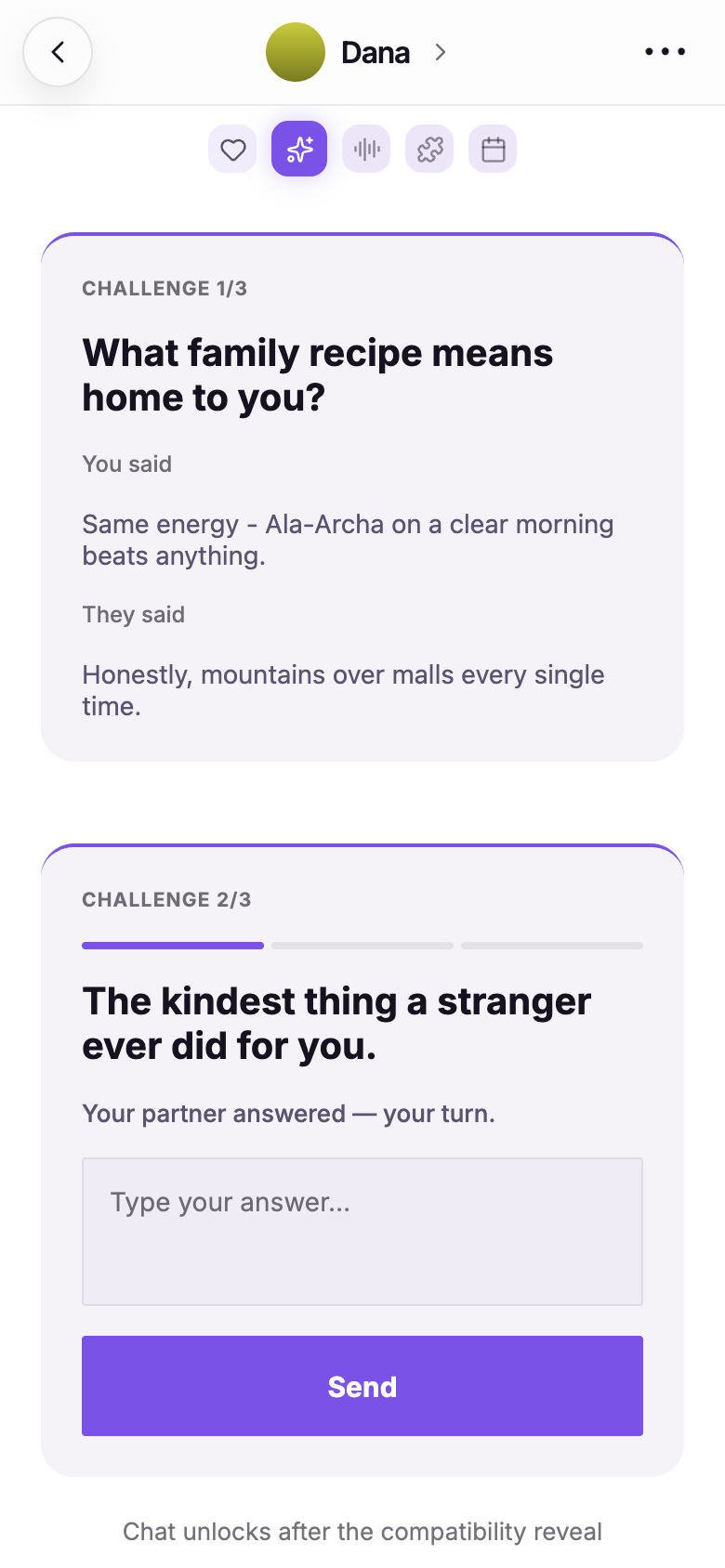
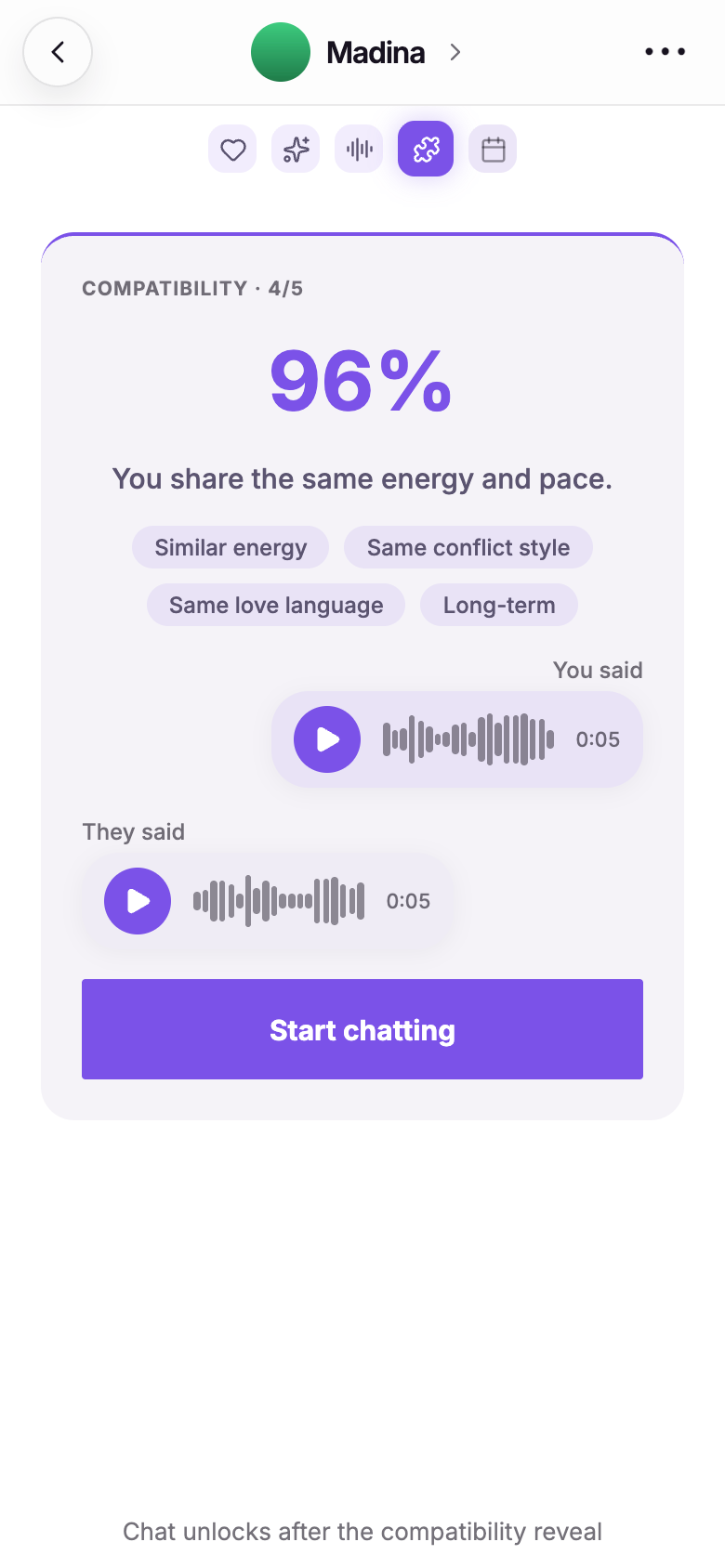
Matches answer challenge questions, and an LLM scores the answers and shifts the pair's compatibility score. When our OpenAI account hit its quota during the beta, scoring fell back to the quiz-based compatibility value and our testers never saw an error. Moderation and transcription failed too.
The scoring fallback was designed. The moderation recovery wasn't: failed jobs were never retried, because arq only
re-queues on its own Retry signal. I added real retries and an hourly
sweep that re-screens the chat messages and voice notes the failed jobs missed.
Feature calls like answer scoring and the place picker fail open, so an AI outage degrades the experience without taking down a core flow. Moderation and transcription never record a pass they didn't run, so on chat and voice an outage delays screening instead of skipping it. The incident cost us a day of scoring and moderation, and the rest of the app kept working.
Auth, rewritten before launch
We had already moved from passwords to phone and SMS OTP. Before we had real users, expected SMS cost and carrier deliverability across Central Asia pushed me to move the whole auth stack to email OTP (Twilio Verify's email channel and SendGrid).
- With no real users yet it was a clean swap: one PR, with 1,500+ backend tests passing.
- Disposable-email domains are blocked at signup.
- Later, an HMAC-keyed ledger made blocks survive account deletion. Deleting an account and signing up again with the same address doesn't put a harasser back in a victim's feed, and the raw email isn't kept.
- An account frozen under a legal hold keeps no readable email, and that address can't re-register either, because the same kind of ledger keeps only its HMAC.
Four languages
The app ships in English, Russian, Kyrgyz and Kazakh. The Kyrgyz came from a human translator's document. I matched 500+ translated strings onto the existing Russian catalog with a script, tracked the 131 gaps that fall back to Russian in a checked-in file, and kept interpolation tokens intact so nothing crashes at render.
Testing
- 2,600+ backend tests and 800+ frontend tests.
- Alembic migrations are applied before each release, and a pre-deploy hook is committed for Git-triggered deploys.
Status
Tanish reached a TestFlight beta, tested by 2 people, with its production backend deployed. I worked on it from April to August 2026, alongside Arzan, which I started in May as its sole engineer.